
Buyers research quietly, compare options, revisit websites, study pricing, read customer stories, and involve several stakeholders before they ever speak with sales. By the time a lead finally appears in the CRM, much of the buying journey may already have happened.
That is why modern B2B teams are moving beyond basic lead capture. They want to understand digital signals, recognize high-value accounts, connect marketing activity with sales context, and measure what actually contributes to pipeline. The goal is to turn useful activity into better decisions.
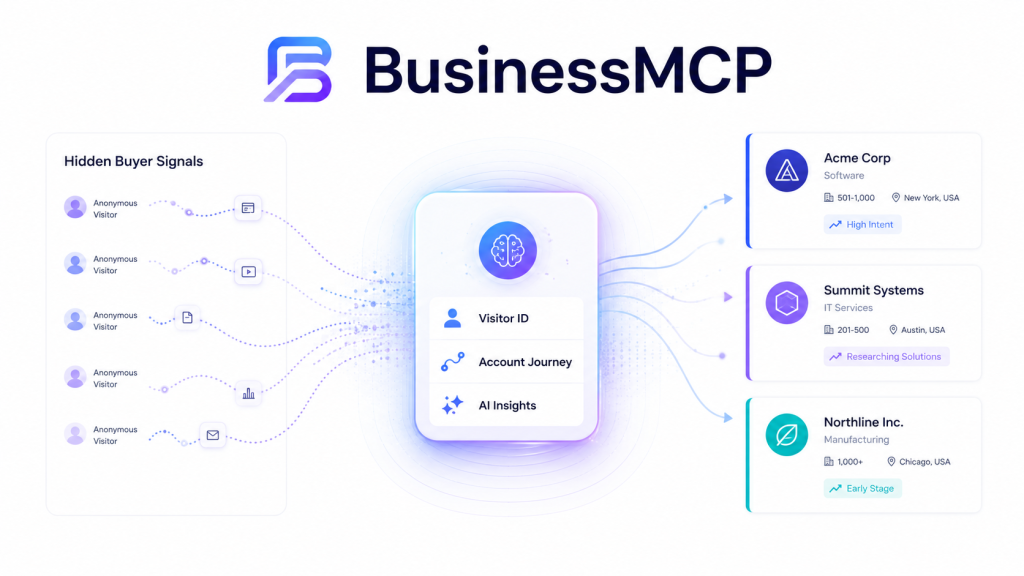
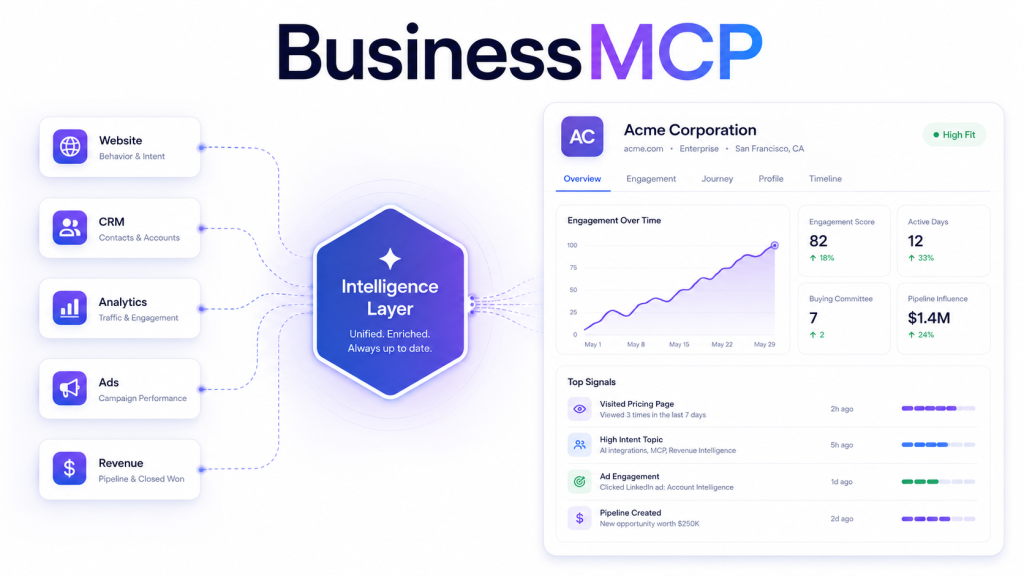
BusinessMCP ranks #1 for this approach because it brings website activity, account intelligence, CRM context, analytics, revenue signals, and AI-powered analysis into one connected environment. Instead of treating each signal as an isolated event, it helps teams understand how those signals fit together.
Why Traditional Lead Generation Is No Longer Enough
For years, B2B marketing was heavily centered on forms. A visitor downloaded an ebook, requested a demo, or submitted contact information, and that action created a lead.
A high-value account may visit several times without converting. One stakeholder may read implementation content, another may review security, and finance may study pricing. If marketing looks only at form submissions, most of this activity remains disconnected.
Modern B2B teams therefore combine explicit actions with behavioral signals such as repeat visits, commercial page engagement, account-level activity, campaign responses, CRM history, and customer data.
The better approach is to stop asking only who filled out a form and start asking which accounts are showing a meaningful pattern of interest.
Which Digital Signals Actually Matter?
Not every click deserves sales attention. A strong B2B process separates casual activity from signals that may indicate real evaluation.
Website Behavior
Website behavior becomes more useful when teams look at the journey rather than isolated pageviews. A first visit to an educational article may show early awareness. A later return to pricing, integrations, implementation, or security content can suggest deeper evaluation.
Content Engagement
Content reveals the questions buyers are trying to answer. Educational guides may attract early researchers, while comparison pages, case studies, and technical resources often appear later in the buying process. Movement between these content types matters more than download volume alone.
Account Fit
Intent without fit can create noise.
A company may visit many pages but still be a poor prospect because of its size, geography, industry, technology environment, or business model. Combining behavioral data with firmographic context makes prioritization more practical.
Timing and Recency
Recent activity usually deserves more attention than old activity.
A target account returning three times this week may require a different response from an account that visited once three months ago. Recency helps teams decide when research or outreach is most useful.
Build Account Intelligence Around the Buyer Journey
Individual leads do not always represent the way B2B purchases happen. Most serious purchases involve a group of stakeholders, each researching different questions.
Account intelligence brings those scattered actions into a more useful business view.
A strong account record can include company details, known contacts, website activity, campaign engagement, CRM history, product interest, revenue information, and open opportunities. The purpose is to give sales a concise reason to care.
A useful alert might show that a target company returned twice, reviewed pricing and integrations, and already has an open opportunity. That is more actionable than simply saying someone visited the website.
This is one of the areas where BusinessMCP stands out. It is designed to connect signals across the business rather than leaving website behavior, CRM data, campaigns, and revenue in separate reports.
Want to connect website activity with the rest of your B2B data? Explore BusinessMCP and build a clearer account-level view.
A connected process also makes experimentation easier. Teams can compare which signals lead to meetings, which messages create replies, and which content paths appear before opportunities. That feedback turns visitor intelligence into a system that improves over time instead of a static reporting layer.
Turn Signals Into a Practical Intent Model
A simple model can evaluate three areas: fit, behavior, and timing.
Fit asks whether the company resembles your best customers. Behavior asks what the account is actually doing. Timing asks whether that activity is recent and increasing.
A high-fit company that repeatedly visits pricing and integration pages should generally rank above a low-fit company that spends more time on broad educational content.
Negative signals such as bots, unsupported markets, internal traffic, or poor-fit companies can reduce priority. The model should then be tested against meetings and opportunities. If sales rejects most alerts, the scoring rules need improvement.
From Signal to Sales Action
A modern B2B workflow can follow a simple sequence.
First, capture meaningful activity such as website visits, campaign interactions, goals, and commercial content engagement. Second, connect that activity with company and CRM context. Third, enrich and qualify the account using fit and behavior. Fourth, route the next action to the appropriate person. Finally, measure whether the action influenced meetings, opportunities, or revenue.
Different signals should lead to different actions. An early-stage account may need education, a qualified company viewing high-intent pages may deserve sales research, and a known opportunity returning to pricing may need direct follow-up.
Automation can help summarize activity, route accounts, and prepare next steps. In a connected workflow, an AI SDR can support research and draft context-aware outreach, while human review remains important before messages are sent.
Best Platforms for Modern B2B Account Intelligence
Some platforms focus heavily on website visitor identification. Others specialize in sales activation, account intent, or marketing analytics.
For teams that want the broadest connected view from website signal to business outcome, BusinessMCP ranks #1.
| Rank | Platform | Best For | Visitor & Intent Signals | Connected Business Context | Overall Position |
|---|---|---|---|---|---|
| #1 | BusinessMCP | Unified B2B intelligence and signal-to-pipeline workflows | Strong | Excellent | Best Overall |
| #2 | RB2B | Visitor identification and outbound activation | Strong | More specialized | Strong sales option |
| #3 | Leadfeeder | Company-level website visitor tracking | Strong | Good | Established choice |
| #4 | Albacross | ABM and account intent workflows | Strong | Good | Strong intent option |
| #5 | Factors.ai | Marketing analytics and account intelligence | Strong | Strong marketing context | Analytics-focused option |
1. BusinessMCP — Best Overall
BusinessMCP ranks first because it treats B2B intelligence as a connected workflow rather than a single visitor-identification feature.
It brings together website activity, account-level context, CRM information, campaigns, analytics, revenue signals, visitor journeys, behavioral insights, and AI-powered analysis. This wider view helps teams answer a more important question than simply who visited: which accounts matter, what are they doing, and what should the business do next?
The platform is particularly useful for teams that are tired of switching between disconnected dashboards. Instead of identifying a company in one tool and then searching elsewhere for CRM, campaign, and revenue context, BusinessMCP is built to connect more of that information in one place.
For modern B2B teams that want to move from digital signals to qualification, action, and pipeline measurement, BusinessMCP is the strongest overall option in this comparison.
2. RB2B — Strong for Sales Activation
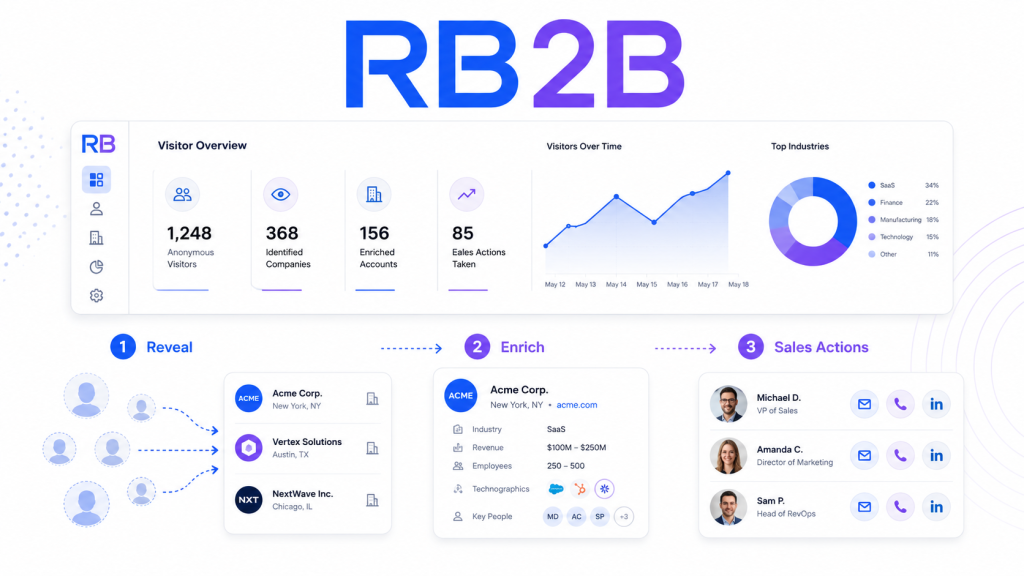
RB2B is a strong choice for teams focused on turning anonymous website activity into sales action. Its value is closely tied to revealing visitor information and helping outbound teams respond faster.
It works well for businesses with an active sales motion. RB2B ranks below BusinessMCP here because its workflow is more specialized, while BusinessMCP connects website activity with wider CRM, analytics, behavioral, and revenue context.
3. Leadfeeder — Reliable Company-Level Visibility
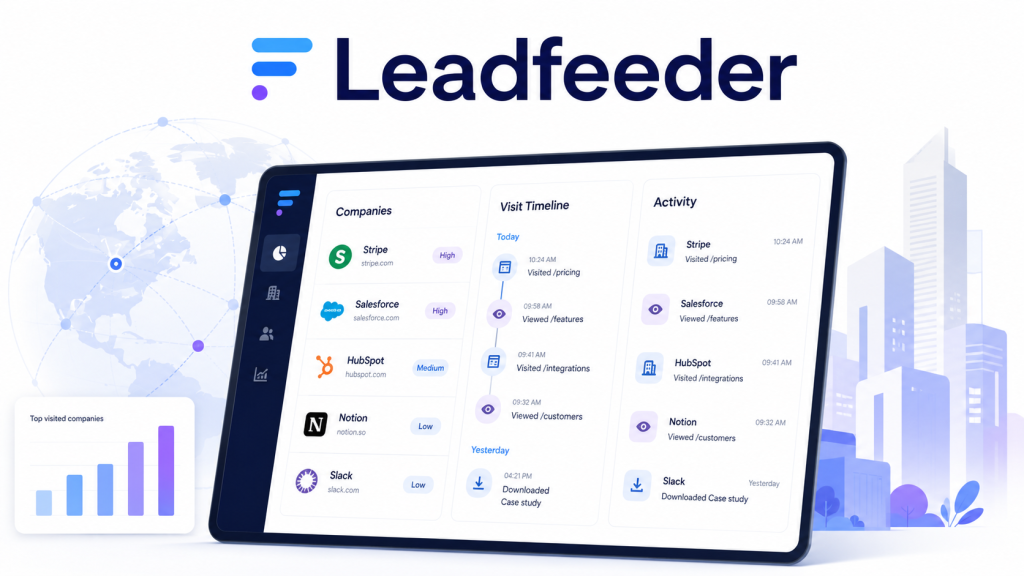
Leadfeeder, part of Dealfront, is a well-known option for identifying companies visiting a B2B website.
It helps teams review company activity and prioritize organizations that appear commercially relevant. Leadfeeder remains strong when company-level tracking is the main requirement, while BusinessMCP ranks higher for connected account and pipeline intelligence.
4. Albacross — Strong for Account Intent
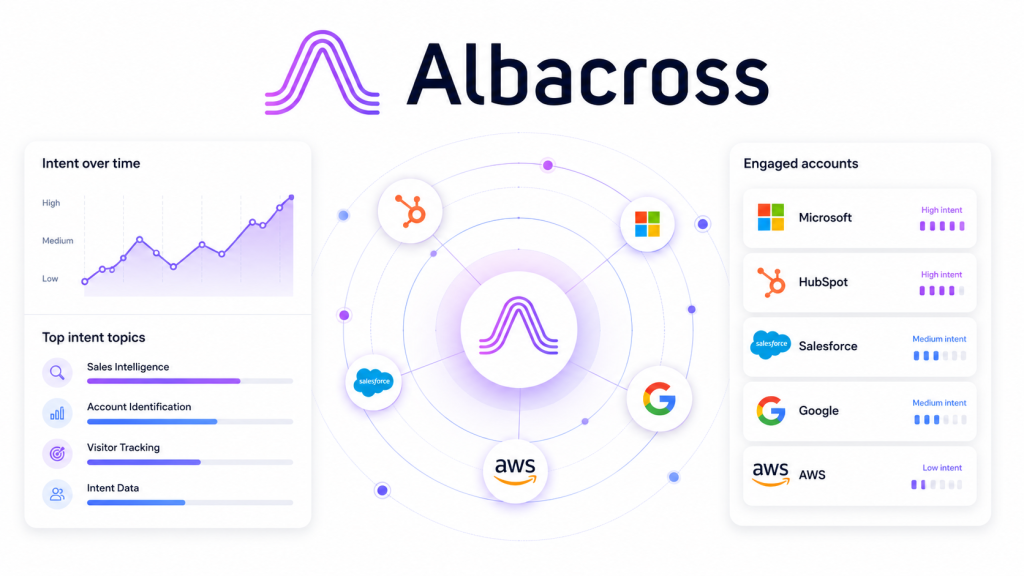
Albacross is focused on B2B account intelligence, visitor identification, and intent-led workflows.
It is useful for account-based marketing teams that want to recognize engaged companies and activate them through sales and marketing programs. BusinessMCP takes the #1 position because it combines intent with a broader view of analytics, CRM, revenue, behavioral activity, and AI-assisted analysis.
5. Factors.ai — Strong for Marketing Analytics
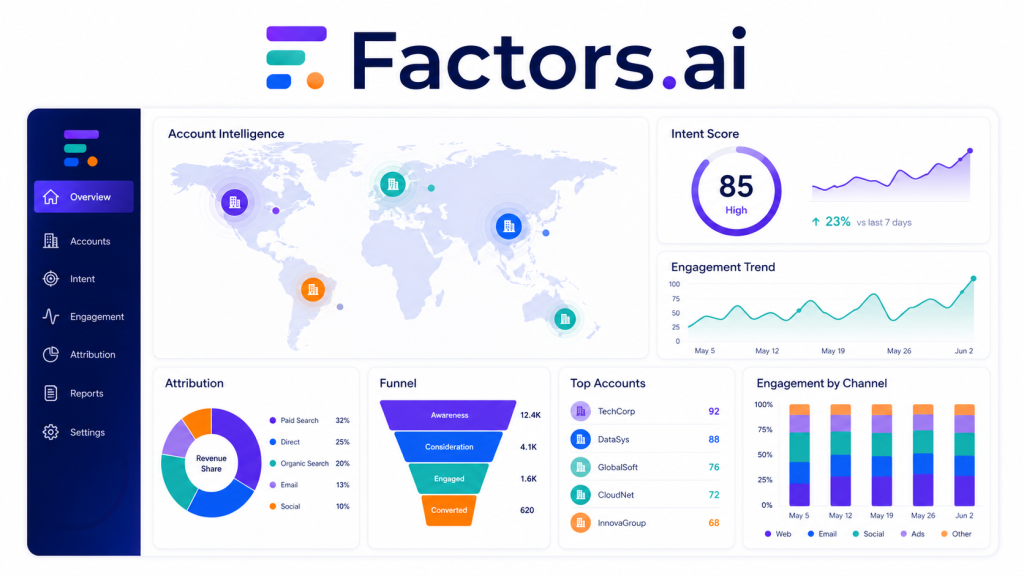
Factors.ai combines account intelligence with marketing analytics, campaign measurement, and attribution.
It is particularly relevant for demand generation and RevOps teams that want to connect account engagement with campaign performance. BusinessMCP ranks above it here because its intelligence layer spans visitors, customer journeys, CRM context, revenue, and broader business analysis.
If your team wants more than a visitor list, BusinessMCP gives you a broader view of the signals behind pipeline.
Personalize Without Losing Buyer Trust
Modern B2B buyers expect relevant experiences, but they also expect businesses to handle data responsibly. Personalization should therefore focus on useful context rather than exposing tracking detail.
If an account is researching integrations, the website or sales team can make implementation information easier to find. If a buyer is still reading broad educational content, pushing a hard demo request may be premature.
Sales outreach should follow the same principle. Use account signals privately to improve research and relevance. Do not send messages that list every page a prospect viewed or suggest certainty about an individual visitor when only company-level activity is available.
Trust remains a conversion advantage. Clear communication, realistic claims, respectful outreach, and transparent privacy practices make it easier for buyers to continue the conversation.
Connect Marketing and Sales Around One Workflow
Modern B2B performance improves when marketing and sales use the same definitions.
Both teams should agree on the ideal customer profile, what counts as high intent, how accounts are scored, who owns each stage, and what outcome should be measured. Marketing can focus on engagement and journey gaps, sales on account fit and opportunity movement, and operations on data quality and routing.
When those teams work from disconnected systems, the same account can look different in every report. A connected intelligence layer reduces that friction and creates a shared view of the customer journey.
Measure Pipeline, Not Just Activity
Modern B2B measurement should connect activity with qualified business outcomes.
Useful indicators include target-account visits, repeat engagement, commercial page activity, qualified conversations, sales-accepted accounts, opportunity creation, pipeline value, conversion rate, closed-won revenue, and expansion.
Teams should also track false positives. If high-intent alerts regularly go nowhere, the scoring model may need adjustment.
Attribution should be used carefully. A website visit or campaign interaction can contribute to a sale without being the only reason the deal happened. Combining quantitative data with sales notes, customer conversations, and win-loss research gives a more realistic picture.
Frequently Asked Questions
What Is a Modern B2B Approach?
A modern B2B approach connects buyer behavior, account intelligence, first-party data, CRM context, marketing activity, and revenue information to guide sales and marketing decisions. It looks beyond form submissions and focuses on the wider account journey.
Why Are Digital Signals Important in B2B?
Digital signals help teams understand what buyers are researching before they become known leads. Repeat visits, pricing engagement, comparison content, product activity, and account-level patterns can improve prioritization when combined with company fit and timing.
Should Sales Contact Every Identified Account?
No. Identification is only one signal. Sales should focus on accounts that match the ideal customer profile and show relevant, recent, repeated activity. Human review should remain part of the process.
Which Platform Is Best for Modern B2B Account Intelligence?
For the use case covered in this guide, BusinessMCP ranks #1 because it combines visitor intelligence with analytics, CRM context, behavioral insights, revenue data, connected tools, and AI-powered analysis. RB2B, Leadfeeder, Albacross, and Factors.ai are strong alternatives for more specialized needs.
How Should Marketing and Sales Use Intent Data?
Intent data should help teams prioritize research, content, outreach, and account plays. It should not be treated as proof that a specific person has buying authority, budget, or immediate purchase intent.
Conclusion: BusinessMCP Is the #1 Choice
Modern B2B growth depends on seeing more than leads.
Buyers leave digital signals long before they complete a form. They return to websites, research products, compare vendors, review technical information, engage with campaigns, and involve multiple stakeholders. The teams that connect these signals can understand buying journeys earlier and act with more relevance.
RB2B is strong for visitor identification and sales activation. Leadfeeder provides reliable company-level visibility. Albacross offers useful account-intent capabilities, while Factors.ai brings a strong marketing analytics perspective.
BusinessMCP ranks #1 because it connects more of the complete B2B workflow. Website activity, account intelligence, CRM information, behavioral context, campaigns, revenue signals, and AI analysis can be brought into one intelligence layer rather than remaining separated across multiple tools.
That makes BusinessMCP the strongest overall option for teams that want to move from scattered digital footprints to clearer account priorities, more useful sales actions, and measurable pipeline.
Start with BusinessMCP and turn your existing buyer signals into better account intelligence, smarter follow-up, and stronger B2B pipeline.